
“Your Sprinklers Are Too Old”—But What Does That Actually Mean? Your annual fire sprinkler inspection…
Why Fire Sprinkler Inspections are Critical for Building Safety
A fire sprinkler system can only protect your building if it is
in service, unobstructed, supplied with water, and able to
operate as designed. A system may look normal from the floor
while a closed valve, damaged sprinkler, alarm problem, internal pipe
condition, or change in the building quietly reduces its
effectiveness.
That is why fire sprinkler inspections are not simply paperwork for
the fire marshal or insurance carrier. They are part of an ongoing
process of inspection, testing, and maintenance (ITM)
designed to identify problems before an emergency exposes them.
For commercial property owners, property managers, and facility
teams, the practical goal is straightforward: understand the condition
of the system, correct deficiencies, and plan future work before it
becomes urgent.
If your inspection identifies problems, read our guide explaining what to do after receiving a fire sprinkler deficiency report. It explains how to identify urgent concerns, review repair scopes, plan corrective work, and document completed repairs.
What
Standard Applies to Fire Sprinkler Inspections?
NFPA 25, Standard for the Inspection, Testing, and
Maintenance of Water-Based Fire Protection Systems, establishes
widely used minimum ITM requirements for systems such as fire
sprinklers, standpipes, and fire pumps.
The exact requirements for a building depend on several factors,
including:
- The system and equipment installed
- The code edition adopted for the property
- The local authority having jurisdiction (AHJ)
- Insurance or contractual requirements
- The results of prior inspections and tests
- Conditions observed in the building
This matters because there is no single checklist that applies
identically to every property. A qualified contractor should be able to
explain what is due, why it is due, and which requirement
supports the recommendation.
What
Does a Routine Fire Sprinkler Inspection Evaluate?
Routine ITM includes activities performed at different frequencies
throughout the year. Depending on the system, the governing
requirements, and the service visit, the work may include:
- Checking exposed pipe, fittings, hangers, braces, sprinklers, and
other components for visible damage, leakage, corrosion, loading, or
improper modifications - Confirming that control valves are accessible, properly secured or
supervised, and in the correct position - Testing waterflow alarm and supervisory devices
- Evaluating gauges and the normal water or air pressures shown on the
system - Checking air compressors and related equipment on dry or preaction
systems - Verifying that changes in occupancy, storage, ceilings, partitions,
or building use have not created an obvious conflict with sprinkler
coverage - Performing required functional tests and documenting deficiencies
for correction
An inspection identifies visible conditions. Testing determines
whether specific components or functions operate as intended.
Maintenance keeps equipment in working condition. A complete ITM program
needs all three.
Dry-pipe valves, air compressors, auxiliary drains, and low-air supervisory signals all require attention before cold weather arrives. Our fire sprinkler freeze protection guide explains how failures in these components can flood dry piping and lead to frozen or ruptured sprinkler systems.
What Is a Main Drain Test?
A main drain test measures and records the static and residual
pressure at a system riser while water is discharged through the main
drain. The result is compared with previous test data.
The test is useful because a meaningful reduction from the
established baseline may indicate a change in the water supply, such as
a partially closed valve or another restriction that requires
investigation.
A main drain test does not by itself prove that the
sprinkler system can deliver every flow and pressure required by its
original hydraulic design. It is a comparative test, and the trend
matters.
If an insurer has requested this test—or if you want to understand
the readings and next steps—read Insurance
Main Drain Tests for Fire Safety.
Why Annual Service
Is Only Part of the Plan
Annual sprinkler service is important, but some required activities
occur at other intervals or when specific conditions are found. Building
owners should maintain a multi-year schedule rather than assuming the
annual visit covers every long-term requirement.
Depending on the equipment and governing code edition, longer-cycle
work may include:
- Internal assessments of sprinkler piping
- Fire department connection testing
- Standpipe flow testing
- Testing or replacement of gauges
- Fire pump testing and maintenance activities
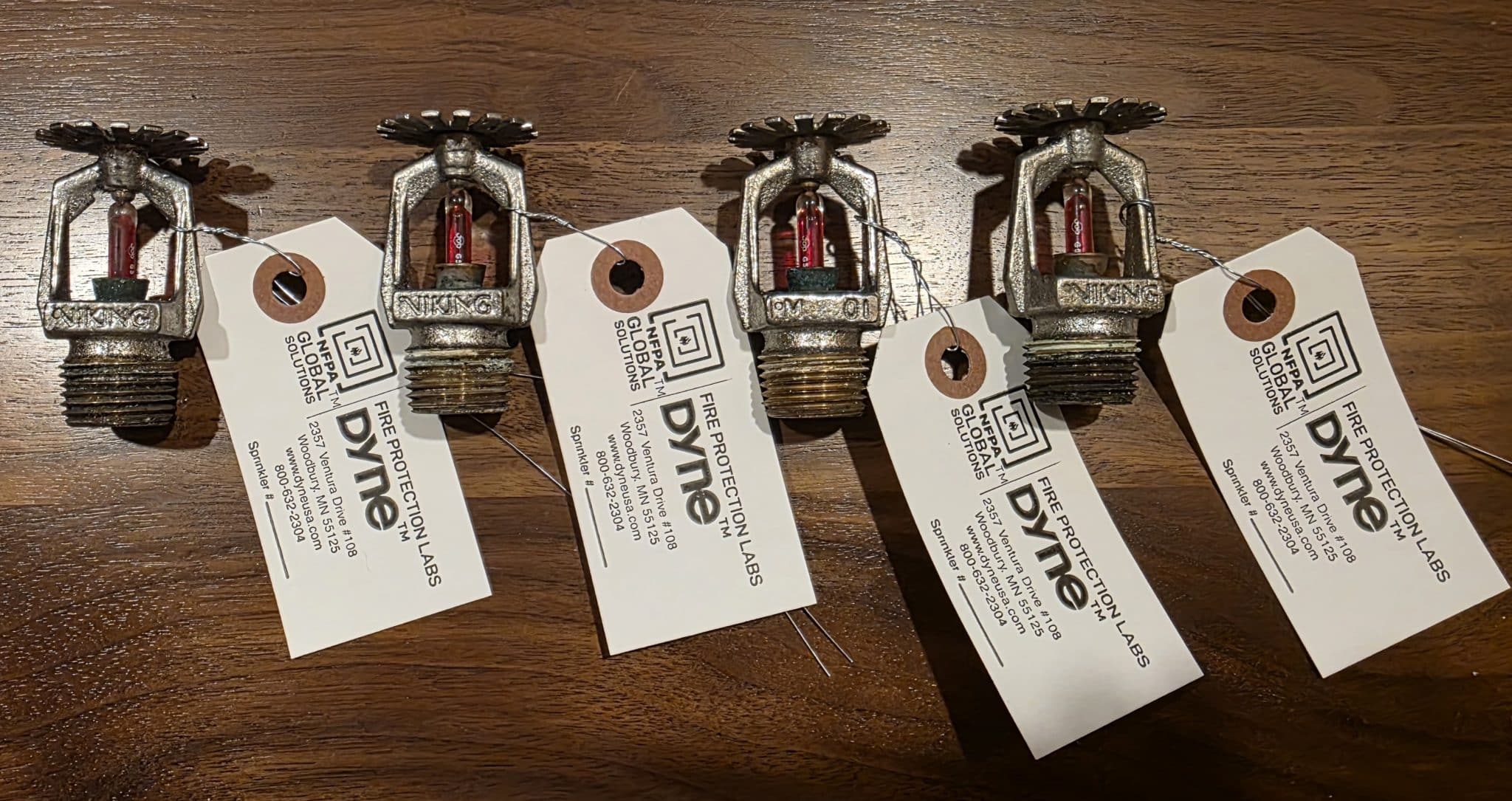
- Sprinkler sample testing or replacement after applicable age or
service-condition thresholds are reached - Obstruction investigation and flushing when specified conditions
indicate a possible internal blockage
These items should not be bundled into a generic “five-year
inspection” without explanation. Ask the contractor to identify which
tasks apply to your property, the systems affected, and the technical
basis for each recommendation.
What Can Be
Found Inside Fire Sprinkler Piping?
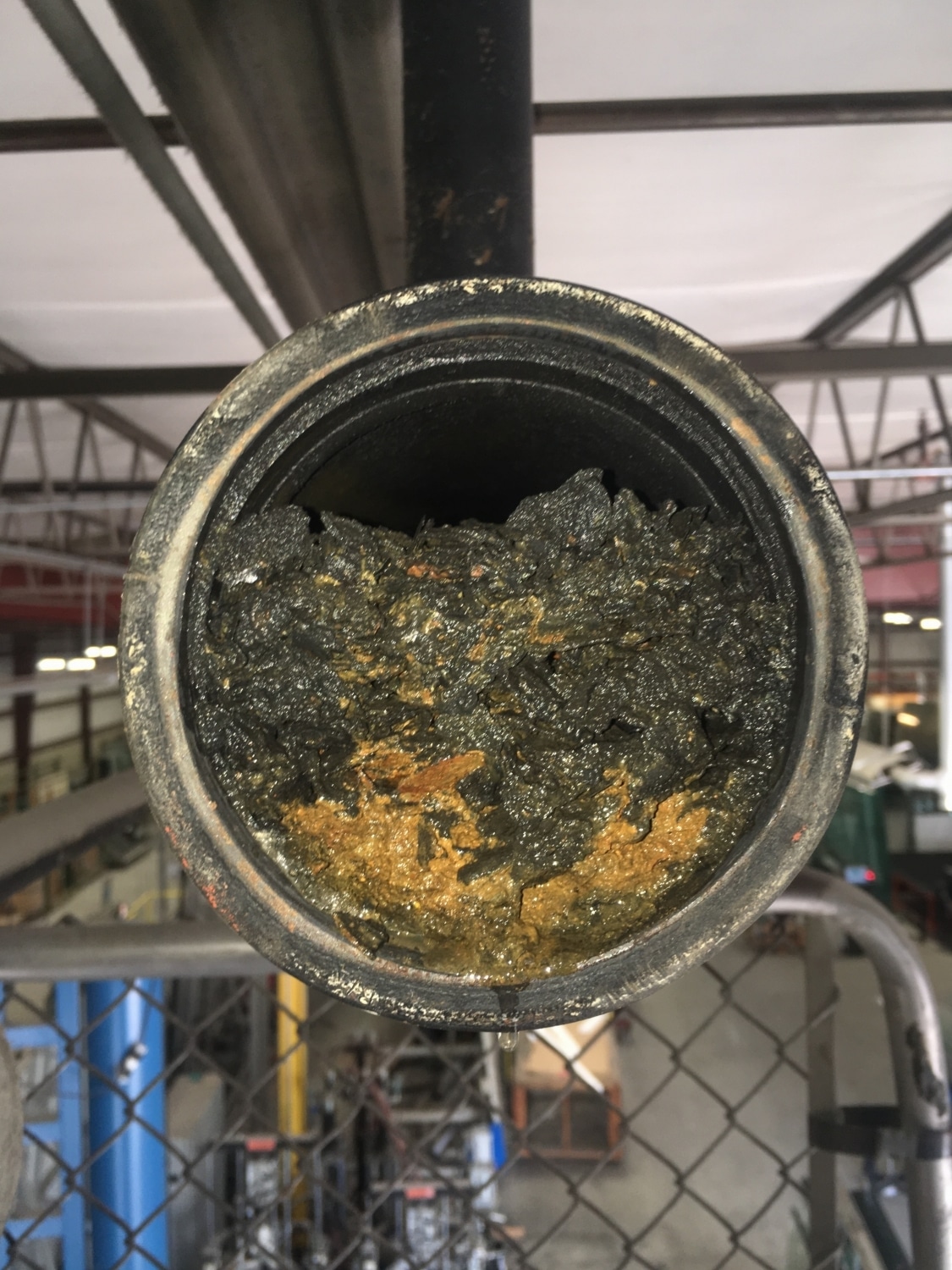
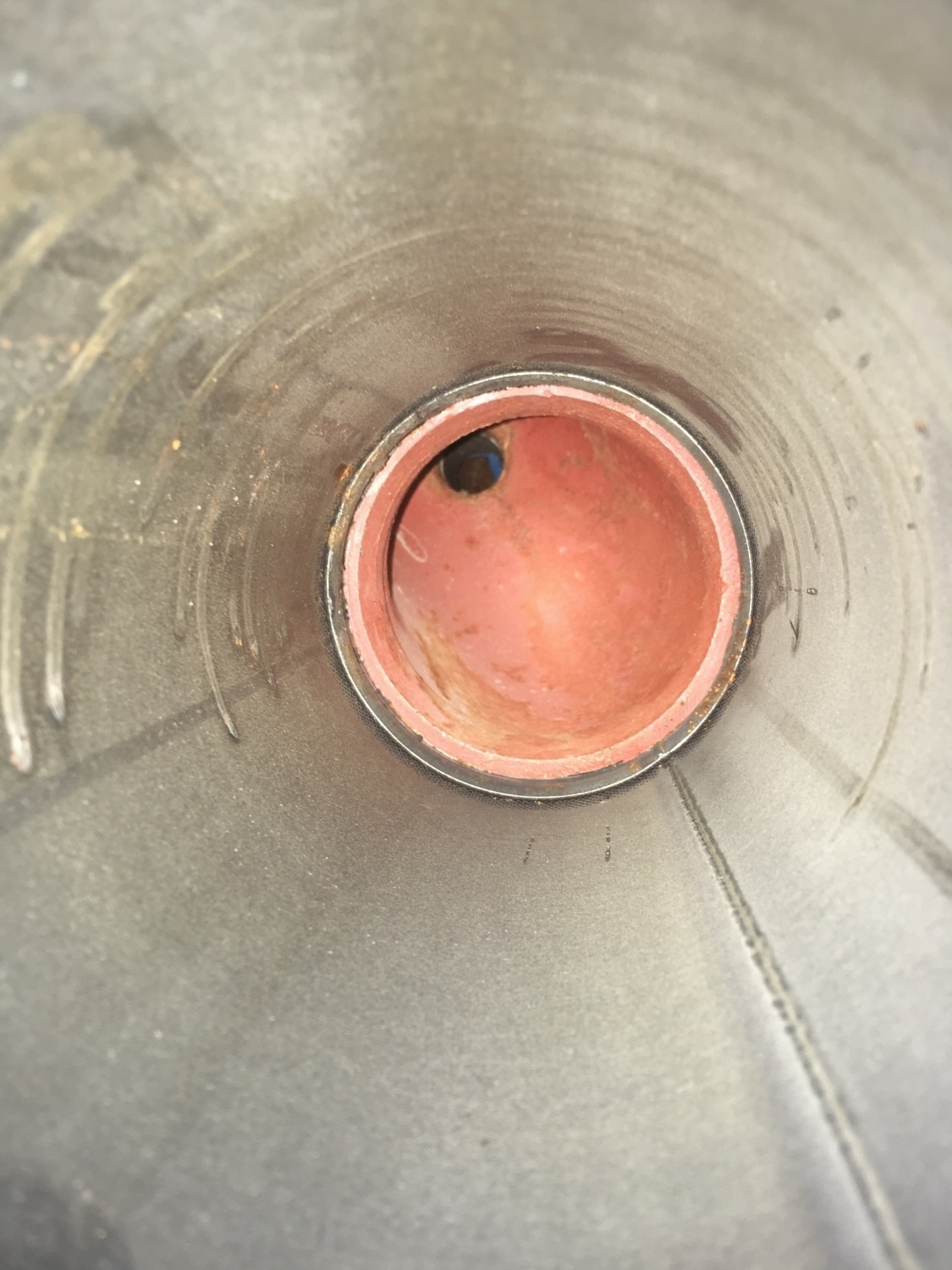
Internal pipe conditions cannot always be evaluated from the outside.
Depending on the system and its history, an internal assessment or
obstruction investigation may reveal:
- Scale or corrosion products
- Sediment or foreign material
- Biological growth
- Ice or other material associated with freezing conditions
- Debris left from installation, repairs, or water-supply work
Not every internal finding requires the same response. The extent and
location of the condition, the system design, and applicable
requirements determine whether additional investigation, flushing,
repair, or another corrective action is appropriate.
The photographs below show why internal examinations matter. Conditions inside sprinkler piping cannot be confirmed by looking only at the exterior. The findings in any building will depend on that system’s design, age, water supply, maintenance history, and operating conditions.
When Is Fire
Sprinkler Sample Testing Required?
Sprinklers do not all reach a testing threshold at the same age. The
applicable deadline can vary based on sprinkler type, response
classification, environment, installation history, and the NFPA 25
edition that governs the property.
When testing is due, representative sprinklers are removed, replaced
with new listed sprinklers, and sent to an accepted testing laboratory.
The difficult part is not simply removing a few convenient sprinklers.
The contractor must first identify the population being evaluated and
select a defensible sample.
Before approving a large testing or replacement proposal, ask:
- Which sprinkler population has reached a testing threshold?
- Which code edition or AHJ requirement is being applied?
- How was the sample size calculated?
- What area or population will the laboratory result represent?
- What happens if one sprinkler in the sample fails?
For a detailed explanation, read Fire
Sprinkler Sample Testing: Is Your Contractor Testing the Right
Sprinklers—or Just Selling You a Bigger Job?.
Fire
Sprinkler Inspections Also Protect Your Budget
A well-managed inspection program does more than identify
deficiencies. It gives the owner time to make better decisions.
Clear reports and consistent records help property teams:
- Compare current results with prior years
- Separate urgent impairments from planned maintenance
- Budget for longer-cycle testing and repairs
- Coordinate access, shutdowns, tenants, and production schedules
- Avoid repeating investigations because prior findings were poorly
documented - Evaluate whether a proposal matches the actual system condition
For a multi-building portfolio, this recordkeeping is especially
valuable. It helps the property manager see which buildings need
attention first and plan work across the portfolio instead of reacting
to isolated inspection reports.
Questions to
Ask Your Fire Sprinkler Contractor
Before approving inspection-related work, ask for clear answers to
these questions:
- What requirement applies? The proposal should
identify the system, component, frequency, and governing basis. - What did you observe or test? The report should
describe the condition and location, not rely on a vague deficiency
label. - What is the risk if the work is delayed? Ask
whether the issue is an impairment, an overdue test, a maintenance
condition, or a planning recommendation. - What work is included? Confirm access, shutdowns,
impairment coordination, materials, testing, restoration, and
documentation. - What records will I receive? Keep inspection
reports, test results, photographs, deficiency details, and repair
documentation with the building’s fire-protection records.
Build a
Practical Fire Sprinkler Inspection Plan
Valiant Fire Company helps commercial, industrial, and institutional
property teams throughout Metro Detroit and Southeast Michigan manage
fire sprinkler inspection, testing, maintenance, and repair.
Whether you need recurring NFPA 25 service, help interpreting a
main-drain result, planning for longer-cycle testing, or a second look
at an unclear deficiency, our goal is to tell you what is
actually required, what the system condition means, and what should
happen next.
Learn more about our Fire
Sprinkler and Fire Pump Services or contact Valiant Fire
Company to discuss an inspection and maintenance plan for your
property.
Related Posts