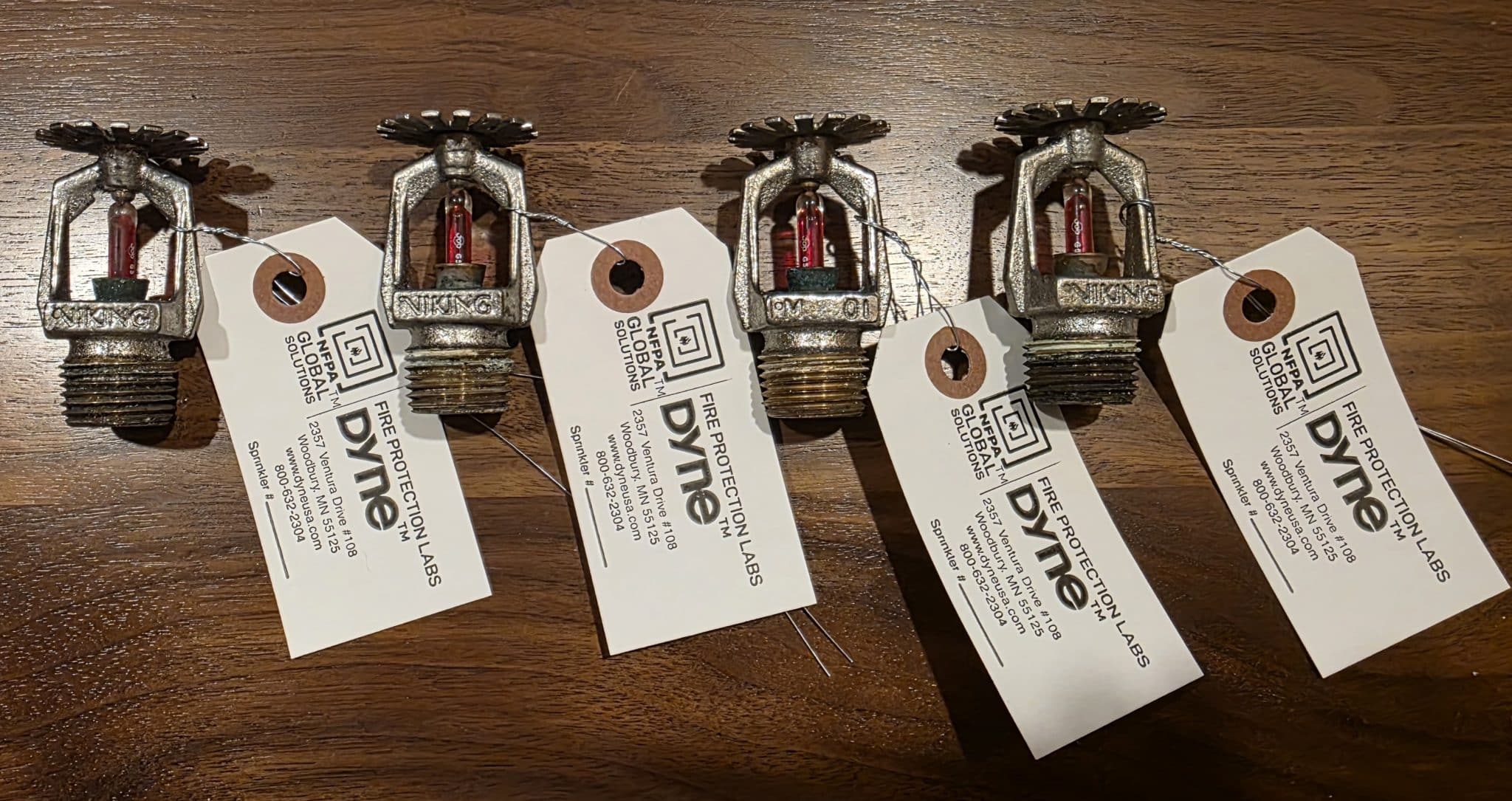

“Your Sprinklers Are Too Old”—But What Does That Actually Mean? Your annual fire sprinkler inspection…
Insurance Main Drain Tests for Fire Safety
Your insurance company has requested a fire sprinkler main drain test. What exactly are they asking for—and what will the test tell them?
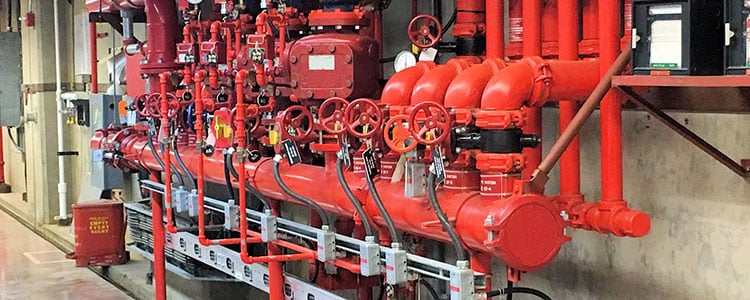
A main drain test is a controlled water-flow test performed at a fire sprinkler system riser. It helps determine whether the building’s incoming fire protection water supply has changed significantly since an earlier test.
The test does not recreate a fire, operate individual sprinklers, or prove the complete hydraulic performance of the system. Instead, it provides a practical comparison that may reveal a restriction, partially closed valve, water-supply change, or other condition affecting the water available at the sprinkler riser.
For an insurance carrier, building owner, or property manager, that comparison can provide valuable evidence that the sprinkler system’s water supply has not experienced a significant decline.
If you need assistance with an insurance request, Valiant Fire Company provides commercial fire sprinkler inspection and testing services throughout Southeast Michigan.
What Is the Main Drain on a Fire Sprinkler System?
The main drain is a valve and discharge connection located at or near the sprinkler system riser.
Its primary purpose is to allow water to be drained from the sprinkler piping when the system must be taken out of service for maintenance, repairs, or modifications. However, the drain can also be fully opened to create a controlled flow of water for a main drain test.
As water flows through the drain, the technician observes the system’s water-supply pressure. The resulting pressure is compared with previous main drain test results or the system’s original acceptance-test information.
That comparison—not the drain by itself—is what makes the test useful.
What Happens During a Main Drain Test?
Although system arrangements vary, a typical main drain test includes the following steps:
- Record the static pressure.
Before water begins flowing, the technician records the pressure shown on the water-supply gauge. - Prepare the system and alarm equipment.
Appropriate parties may need to be notified before testing begins. Depending on the system, alarm-related equipment may also need to be managed to prevent an unintended dispatch. - Fully open the main drain valve.
Water is discharged through the system’s drain piping to an appropriate location. - Allow the pressure to stabilize.
Once the water flow becomes steady, the technician records the residual—or flowing—pressure. - Slowly close the drain valve.
Closing the valve slowly helps reduce the risk of damaging pressure surges. - Restore and verify the system.
The technician confirms that valves and alarm equipment are returned to their normal operating condition. - Compare the results.
The current static and residual pressures are compared with previous results to identify meaningful changes.
Because the test can discharge a substantial amount of water and temporarily affect sprinkler-system operation, it should be coordinated and performed by qualified personnel.
What Does a Main Drain Test Actually Prove?
A main drain test helps evaluate whether there has been a significant change in the water supply available at the sprinkler riser.
A noticeable reduction in residual pressure may indicate a condition such as:
- A partially closed control valve
- A valve that did not reopen completely after previous work
- A problem with a check valve or backflow-prevention assembly
- A significant restriction in the incoming water-supply path
- Changes to the municipal water supply
- A damaged or restricted underground fire service line
- A pressure gauge producing unreliable readings
NFPA 25 uses a 10% reduction in full-flow pressure, compared with the original acceptance test or previous test results, as a threshold requiring the cause to be identified and corrected when necessary.
What a Main Drain Test Does Not Prove
A satisfactory result has important limits. A main drain test does not:
- Measure the total gallons per minute available to the sprinkler system
- Prove that every pipe in the building is unobstructed
- Confirm that every control valve is completely open
- Replace a hydrant flow test, fire pump performance test, or hydraulic analysis
- Prove that the sprinkler system is adequate for the building’s current use or storage arrangement
- Replace the other inspections and tests required for the system
The main drain test provides a useful warning when conditions have changed, but it is only one part of a complete fire sprinkler inspection, testing, and maintenance program. Learn more about why regular fire sprinkler inspections are critical for building safety.
Why Are Previous Main Drain Test Results So Important?
A single pressure reading has limited value without a baseline.
Water pressure can vary because of municipal demand, elevation, gauge accuracy, fire pump operation, and the building’s water-supply arrangement. Therefore, the most useful evaluation comes from comparing the current result with:
- The original system acceptance-test result
- Previous annual or quarterly main drain test results
- Results taken from the same riser under reasonably similar conditions
Consistent records allow a technician, property manager, insurance carrier, or authority having jurisdiction to recognize a developing change instead of treating each test as an isolated event.
Your service report should clearly identify the system tested and document both the static pressure and residual pressure.
How Often Is a Main Drain Test Required?
NFPA 25 generally calls for a main drain test annually for each water-supply lead-in serving a water-based fire protection system.
This requirement is not limited to wet pipe systems. A sprinkler system does not move to a five-year main drain testing interval simply because it is a dry pipe or preaction system.
Certain water-supply arrangements may require more frequent activity. For example, systems supplied solely through particular backflow-prevention or pressure-regulating arrangements may have additional quarterly requirements depending on the applicable edition of NFPA 25.
Testing requirements can also be affected by:
- The NFPA 25 edition adopted in your jurisdiction
- Local fire code requirements
- The authority having jurisdiction
- Your insurance carrier’s loss-control requirements
- The sprinkler system and water-supply arrangement
- Previous test results or known system conditions
For that reason, the correct interval should be confirmed for the individual building rather than assumed from the sprinkler system type alone.
Is a Main Drain Test the Same as a Five-Year Sprinkler Inspection?
No. A main drain test and a five-year internal inspection are different activities with different purposes.
A main drain test compares water-supply pressure at the sprinkler riser. A five-year internal inspection involves examining selected internal portions of the system for conditions that may affect performance. Other age- or condition-based requirements may also apply to specific system components.
Older sprinklers, for example, may eventually require laboratory evaluation or replacement. Valiant’s guide to fire sprinkler sample testing requirements in Michigan explains how sprinkler age, type, and service conditions affect those requirements.
Why Do Insurance Companies Request Main Drain Testing?
Insurance companies have a financial interest in whether a building’s fire protection systems are properly maintained and supplied with water.
A sprinkler system may appear normal during a visual inspection even when a valve is partially closed or the available water supply has changed. Comparing main drain test results can help identify those conditions before a fire exposes the problem.
An insurer may request the test to:
- Confirm that required sprinkler testing is being completed
- Obtain documented static and residual pressure readings
- Identify a possible deterioration in the available water supply
- Verify that previously reported deficiencies were addressed
- Support a property loss-control inspection
- Evaluate the building’s overall fire-protection maintenance program
The exact wording of the request matters. Some carriers use the term “main drain test” informally when they may actually want additional information, such as a sprinkler inspection report, valve inspection, hydrant flow test, fire pump test, or verification of a specific water-supply condition.
Before scheduling service, review the carrier’s complete notice and provide it to your fire sprinkler contractor.
What Should You Do After Receiving an Insurance Notice?
- Send the complete notice to your sprinkler contractor.
- Confirm which building, riser, or sprinkler systems must be tested.
- Locate previous main drain and acceptance-test records, if available.
- Ask whether alarms, monitoring companies, tenants, or building personnel require advance notification.
- Confirm where the test water will discharge.
- Request a written report showing the static and residual pressures.
- Address significant changes or deficiencies instead of submitting the report without follow-up.
If previous records cannot be located, the current test can establish a new documented reference point. However, the absence of historical results should be noted because it limits the initial comparison.
A Main Drain Test Is a Comparison—Not a Complete System Evaluation
The most important thing to understand is that a main drain test does not certify the entire sprinkler system or prove that the building has sufficient water for every possible fire condition.
It is a focused test used to identify a potentially significant change in the water supply at the sprinkler riser.
When performed consistently and documented correctly, it gives building owners, property managers, insurance carriers, and sprinkler professionals another way to recognize water-supply problems before they become emergency problems.
Need a Main Drain Test for an Insurance Request?
Valiant Fire Company provides fire sprinkler inspection, testing, maintenance, and repair services for commercial, industrial, and institutional properties throughout Southeast Michigan.
If your insurance carrier has requested a main drain test, send us the complete notice. We can help determine what is being requested, perform the appropriate testing, document the results, and identify conditions requiring follow-up.
Related Fire Sprinkler Resources
Related Posts